What is SELENON‑RM?
SELENON-related myopathy (SELENON-RM), formerly called SEPN1-related myopathy, is a rare genetic muscle disease that mainly weakens the neck, trunk and breathing muscles.
About SELENON-RM
SELENON (formerly SEPN1)-Related Myopathy (SELENON-RM) is a group of rare progressive congenital disorders that impair the body’s ability to synthesize Selenoprotein N1. In order for a child to inherit SELENON-RM, both parents must carry a mutated copy of the gene encoding SELENON.
Clinically, SELENON-RM shares similarities with other congenital muscular dystrophies (CMD), particularly those characterized by spinal rigidity. However, distinguishing features such as axial muscle weakness and early-onset respiratory insufficiency, even in ambulatory individuals, differentiate SELENON-RM from other CMDs.
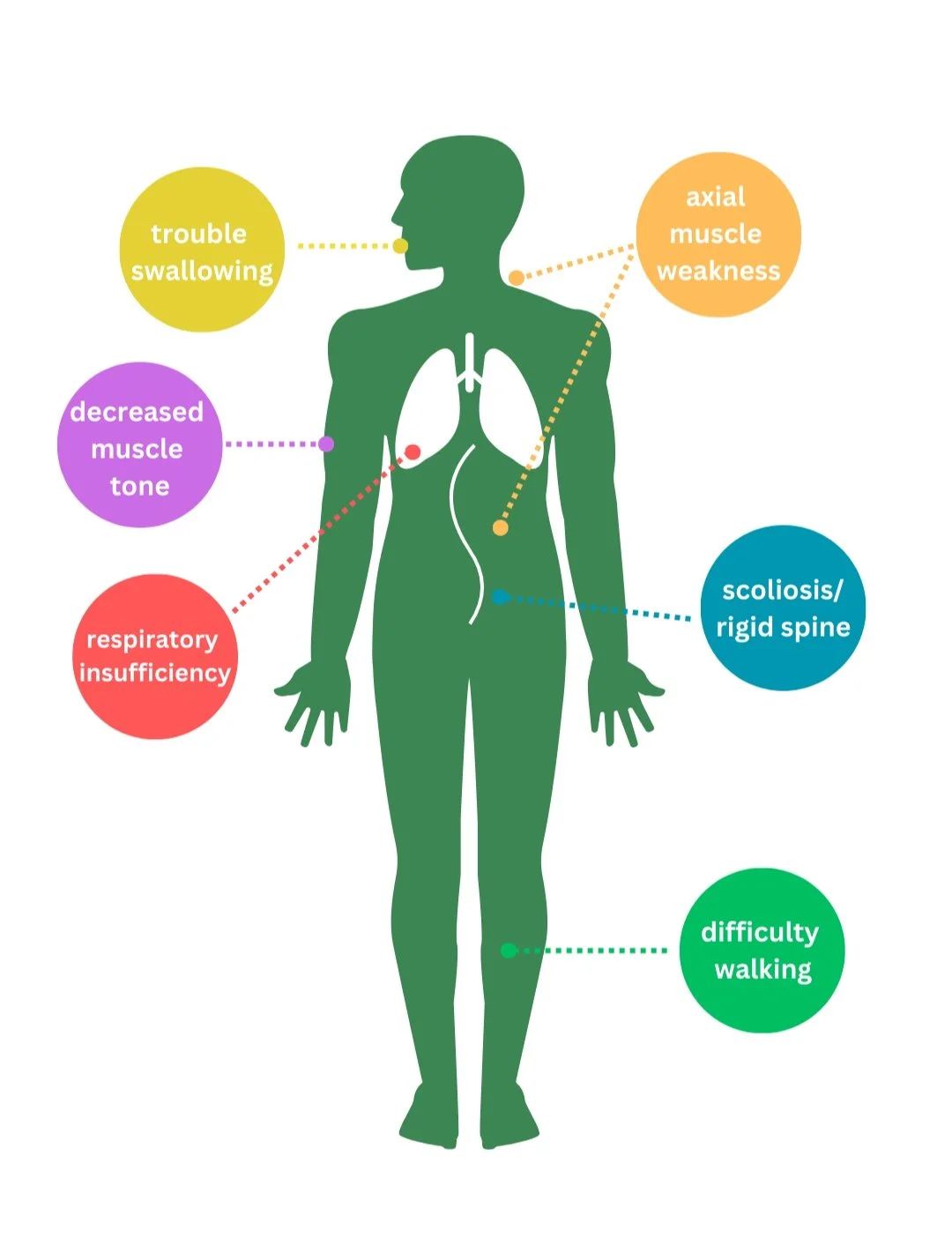
Infants born with SELENON-RM often present with hypotonia (reduced muscle tone leading to ‘floppiness’) and delayed gross motor milestones, such as rolling over or crawling. Muscle weakness is typically most pronounced in the neck and trunk, which can make simple tasks—like raising the head, sitting, standing, or transitioning between positions—difficult or impossible without assistance. Muscle weakness might also affect chewing and swallowing, with some individuals needing feeding tubes to maintain adequate nutrition.
Although most individuals with SELENON-RM will learn to walk, spinal rigidity and rapidly progressing scoliosis can limit mobility. Additionally, respiratory complications from diaphragm weakness often emerge early, leading to nocturnal hypoventilation. Children as young as one year old might require ventilatory support during sleep to maintain adequate oxygen levels.
SEPN1 and other names for SELENON-RM
The gene behind SELENON-RM used to be called SEPN1. It was renamed SELENON, so older medical records, genetic test reports and research papers often use different names for the same condition:
SEPN1-related myopathy (SEPN1-RM)
the most common name before the gene was renamed from SEPN1 to SELENON
Selenoprotein N-related myopathy
named for the protein the gene makes
Rigid spine muscular dystrophy 1 (RSMD1)
also called congenital muscular dystrophy with rigid spine
Congenital myopathy 3 with rigid spine (CMYO3)
the name used by OMIM and the NIH
Multiminicore disease (SELENON-related)
when muscle biopsies show “minicores”
Congenital fiber-type disproportion (SELENON-related)
when muscle biopsies show fiber-size differences
Mallory body-like (desmin-related) myopathy
an older name for some SELENON cases
Symptoms of SELENON-RM
- Weakness in the neck and trunk (axial muscle weakness)
- Low muscle tone (hypotonia) in infancy
- Breathing problems (respiratory insufficiency), often at night
- Scoliosis or a rigid spine
- Trouble chewing or swallowing
- Difficulty walking or delayed motor milestones
Living with SELENON-RM?
Connect with other families and find research studies you can join.
How Giving Strength is funding SELENON-RM research
There is no approved treatment for SELENON-RM yet. Giving Strength funds scientists and clinicians around the world working toward one.
Other trusted resources
Rigid spine muscular dystrophy
SELENON-related myopathy (SELENON-RM)
Congenital myopathy 3 with rigid spine
Selenoprotein N-related myopathy: a natural history study
Cure CMD (congenital muscular dystrophy community)
These sites are not affiliated with Giving Strength. This page is for general information and is not medical advice; please talk with your neuromuscular specialist about your own care.
Treatment is possible, with your help.
Large pharmaceutical companies rarely fund ultra-rare diseases. Independent donations go directly to the research teams working on SELENON-RM.